
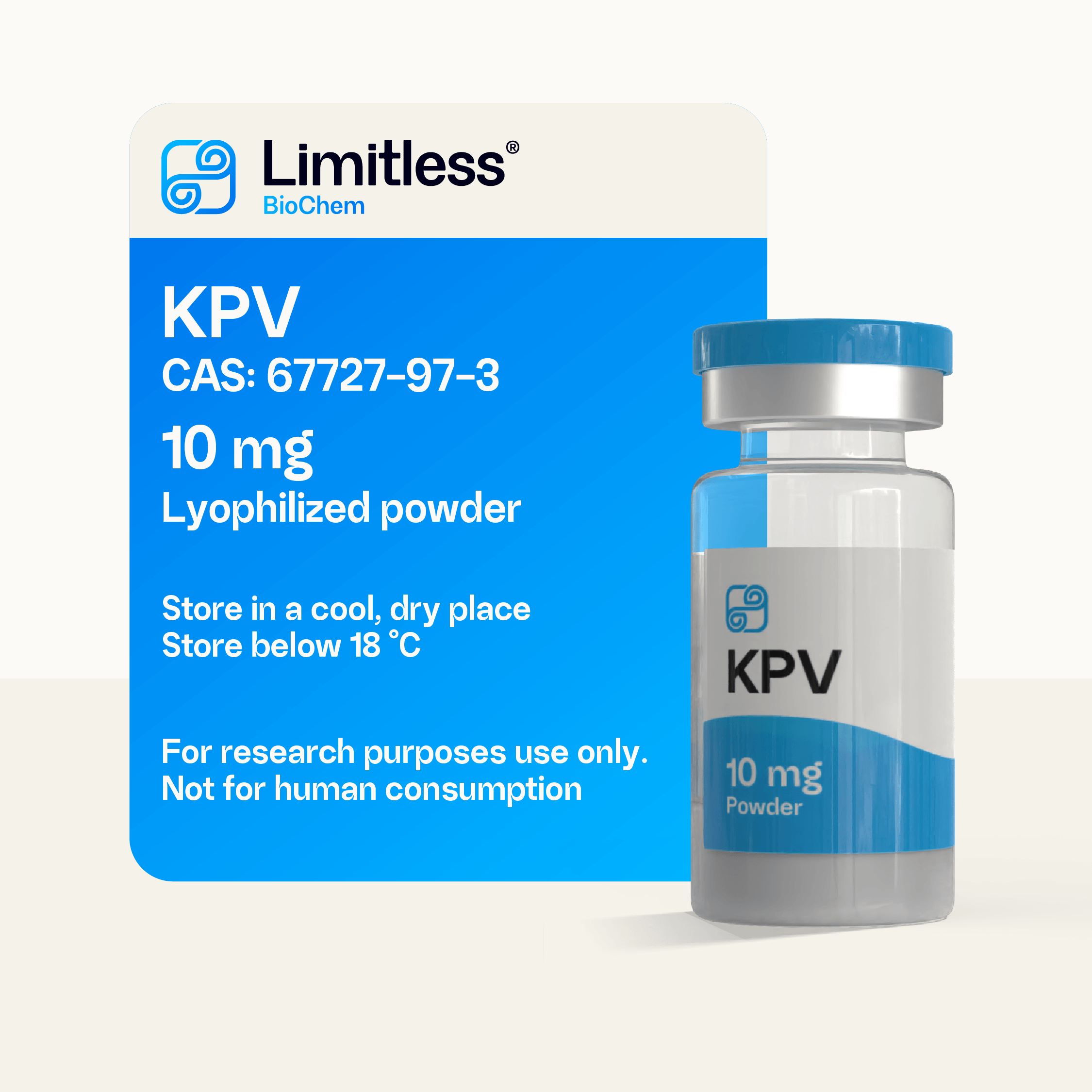
KPV 10mg
How long does it take KPv peptide to work?
Most people notice initial, subtle shifts from KPV peptide within 2 to 4 weeks, with clearer and more consolidated results appearing around 4 to 8 weeks. Because KPV targets cellular inflammatory pathways (such as NF-kB), the timeline depends heavily on whether you are treating a localized issue like gut inflammation or skin irritation, and whether you use oral, subcutaneous, or topical administration.
Beverly Hills Rejuvenation Center +3
Week-by-Week Timeline
- Weeks 2–4: First signs of change. For gastrointestinal goals, users often report a reduction in bloating or mild digestive comfort. For skin concerns, minor drops in surface redness or irritation may appear.
Formation By Dr. Gopal Grandhige +1
- Weeks 4–6: Effects consolidate. Tangible improvements in symptom scores or daily comfort become more apparent rather than just random good days.
Beverly Hills Rejuvenation Center
- Weeks 6–8: Standard evaluation point. Practitioners typically assess the response at this stage to decide whether to continue, taper, or stop a standard 4-to-8-week cycle.
Peptides Explorer +1
Factors That Impact Results
- Route of Administration: Oral capsules target the gastrointestinal tract locally, while subcutaneous injections or topical applications are chosen for systemic or surface-level concerns.
Beverly Hills Rejuvenation Center +1
- Target Issue: Acute flare-ups can shift faster, whereas chronic or deep-seated inflammation requires multi-week consistency to alter the baseline.
Formation By Dr. Gopal Grandhige +1
- Protocol Stacking: KPV is frequently paired with other compounds like BPC-157 for comprehensive gut health protocols, which can influence the overall trajectory.
How to use KPV?
KPV is a tripeptide (lysine-proline-valine) studied for its anti-inflammatory properties. Because KPV lacks FDA approval for human clinical use, there are no official standard dosing guidelines, and administration methods vary depending on the intended target.
 Rite Aid +5
Routes of Administration
- Oral: Used primarily for gut-related concerns, as the peptide is designed to interact with intestinal cell transporters.
- Topical: Applied as a cream or gel directly onto the skin to target localized irritation, redness, or surface inflammation.
- Subcutaneous Injection: Administered via a small needle under the skin (such as the abdomen or thigh) for systemic distribution. Vials typically require reconstitution with bacteriostatic water
.
- Nasal Spray: Delivered via mucosal absorption, though this is the least-studied format.
Rite Aid +4
Common Research & Community Protocols
- Injectable: Ranges from 200 mcg to 500 mcg per day (or up to 1–2 mg per week divided into separate injections).
- Oral: Doses reported in non-clinical tracking vary from 1 mg to 10 mg daily depending on the protocol.
- Topical: Creams typically feature a 0.1% to 1% concentration applied twice daily.
Peptidepedia +2
Reconstitution
Recommended solvent — Bacteriostatic water

For diluting lyophilized peptide powders, use a sterile and suitable research solvent such as bacteriostatic water (BAC), which may help support handling stability and reduce contamination risk.
For convenient laboratory use, see Bacteriostatic water 10ml.


Avis
Il n’y a pas encore d’avis.