Promo !

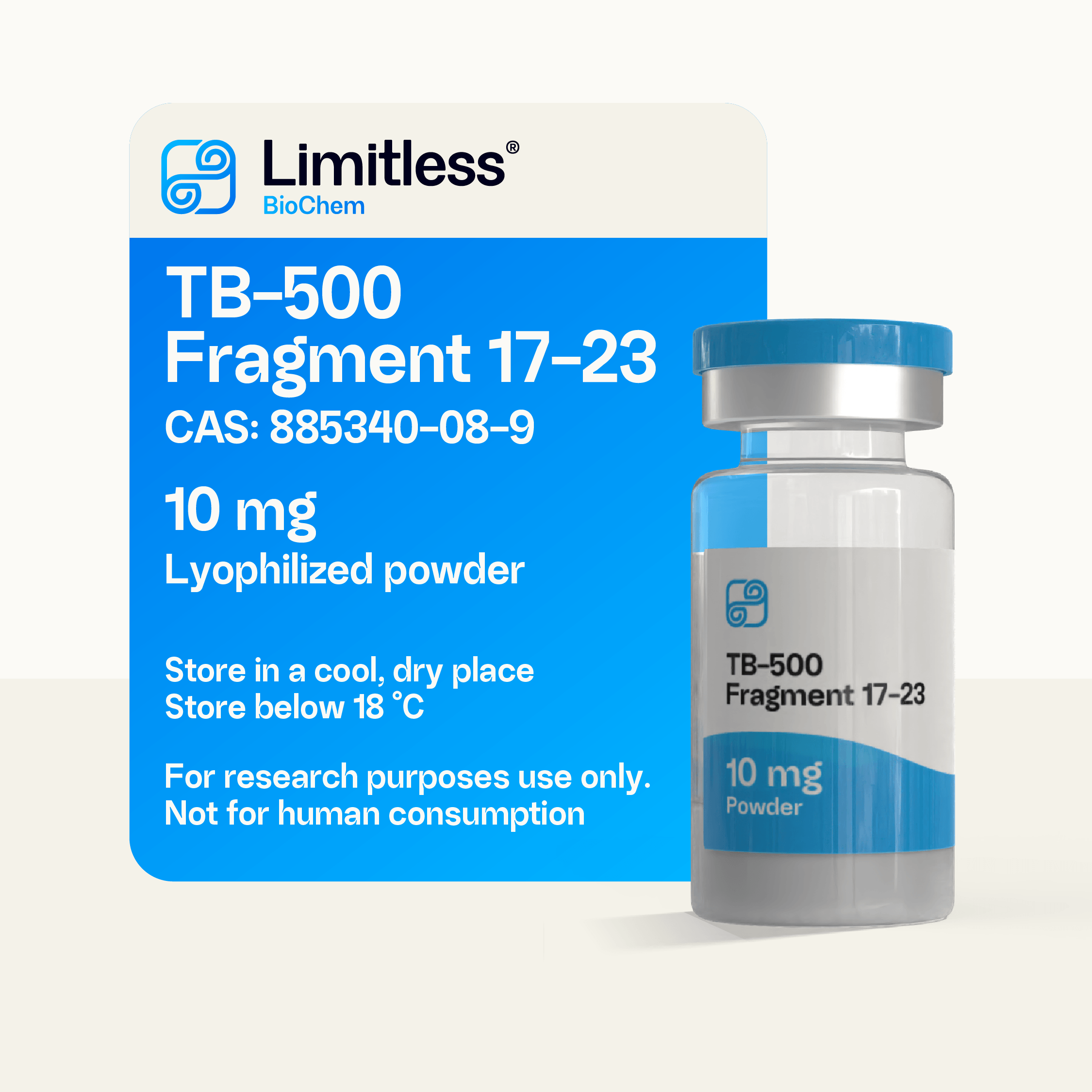
TB-500 Fragment 17-23 10 mg

Le prix initial était : $74.00.Le prix actuel est : $70.00.

TB-500 Fragment 17-23 10 mg research-grade lyophilized peptide powder supplied in a glass vial. TB-500 Fragment (17-23) is a heptapeptide fragment derived from the active region of thymosin beta-4, corresponding to amino acids 17–23 (sequence Ac-LKKTETQ), and is studied in experimental models of tissue repair, actin cytoskeleton modulation, angiogenesis and inflammation control.

Research Use Only: All products are intended exclusively for laboratory and scientific research. Not for human or veterinary use.


Purity
High-purity research grade


Form
Lyophilized peptide powder


Content
10 mg TB-500 Fragment (17-23) per vial


Packaging
Glass vial with sterile closure


Storage
Store lyophilized at 2–8 °C (desiccated, protect from light)


Molecular formula
C38H68N10O14


Molecular weight
≈ 889.0 g·mol⁻¹


Sequence
Ac-Leu-Lys-Lys-Thr-Glu-Thr-Gln-OH (Ac-LKKTETQ)


CAS number
885340-08-9


Research Overview

TB-500 Fragment (17-23) is a short thymosin beta-4–derived heptapeptide encompassing the LKKTETQ motif that has been identified as an active domain involved in actin binding and tissue-repair–related signaling. In in vitro and in vivo experimental systems, this fragment is used as a minimalist tool to study how truncated thymosin beta-4–derived sequences can influence cell motility, wound closure, angiogenesis and inflammatory mediator profiles in a more focused manner than the full-length parent protein.

Primary Research Areas

  • Actin cytoskeleton and cell motility: used in models evaluating how thymosin beta-4–derived fragments modulate actin polymerization, cytoskeletal dynamics and directed cell migration in fibroblasts, endothelial cells and other motile cell types under controlled laboratory conditions.
  • Wound-healing and tissue-repair models: applied in experimental wound-closure assays to investigate fibroblast migration, extracellular matrix deposition and re-epithelialization processes associated with soft-tissue repair and regeneration research.
  • Angiogenesis and vascular remodeling: incorporated into in vitro and in vivo angiogenesis models to explore endothelial cell migration, tube formation and vascular network remodeling, as well as interactions with growth factors such as VEGF in repair-focused studies.
  • Inflammatory mediator modulation: used as a probe in research on cytokine and chemokine profiles at sites of experimental injury, examining how thymosin beta-4 fragments can influence the balance between pro- and anti-inflammatory signaling during tissue remodeling.
  • Neuroprotection and CNS injury models: evaluated in preclinical central nervous system models to study potential effects on glial and neuronal cell survival, axonal support and inflammatory control in the context of brain and spinal cord injury research.
TB-500 is a synthetic heptapeptide (a short chain of seven amino acids, sequence Ac-LKKTETQ) that mimics an active region (amino acids 17–23) of Thymosin Beta-4 (Tβ4), a naturally occurring 43-amino-acid protein found in virtually all human and animal cells. [1, 2, 3, 4]
Key Characteristics & Proposed Functions
  • Actin Regulation: It binds and sequesters monomeric actin, helping cells reorganize their internal scaffolding and migrate toward injured tissue. [1, 2]

  • Angiogenesis: It is reported to support the growth of new blood vessels into healing tissue, improving local blood supply. [1, 2]

  • Inflammation Modulation: It helps dampen inflammatory signaling and reduce scar tissue/fibrosis in animal and laboratory models. [1, 2]

  • Systemic Reach: Unlike localized compounds, TB-500 is studied for whole-body cell migration and systematic recovery rather than purely local repair. [1, 2]

Safety, Regulation, and Status

  • Not FDA Approved: TB-500 is not approved by the U.S. Food and Drug Administration (FDA) or other major global health authorities for human clinical use. [1, 2]

  • Lack of Human Trials: Most available data comes from laboratory or animal studies, or unverified anecdotal reports from the fitness and biohacking communities. [1, 2]

  • Sports Prohibitions: It is prohibited in human sports by the World Anti-Doping Agency (WADA) and is often monitored or regulated as a designer/veterinary compound (e.g., used historically or restricted in racehorses). [1]

  • Risks: Because it is unprescribed and largely sourced as a research chemical, product purity, sterility, and long-term human side effects (such as theoretical links to cell proliferation or tumor growth concerns noted in literature) remain unknown. [1, 2]
Reconstitution

Recommended solvent — Bacteriostatic water

Bacteriostatic Water – 10 ml in glass vial - Limitless BioChem

For diluting lyophilized peptide powders, use a sterile and suitable research solvent such as bacteriostatic water (BAC), which may help support handling stability and reduce contamination risk.

For convenient laboratory use, see Bacteriostatic Water – 10 ml.
Why Limitless Biochem Shop?

Limitless BioChem is a trusted supplier of research compounds. Our products meet strict quality standards and are compliant with EU requirements. We focus on the safe and reliable supply of peptides and pure compounds intended exclusively for research or collector purposes.

This product is not intended for human or veterinary use. It is for collection or research purposes only. It cannot be used as food, dietary supplement or medicine! The information provided in the text on this page is for educational purposes only and does not constitute medical or other advice.

Avis

Il n’y a pas encore d’avis.

Soyez le premier à laisser votre avis sur “TB-500 Fragment 17-23 10 mg”

Votre adresse e-mail ne sera pas publiée. Les champs obligatoires sont indiqués avec *

Panier

Save to list