
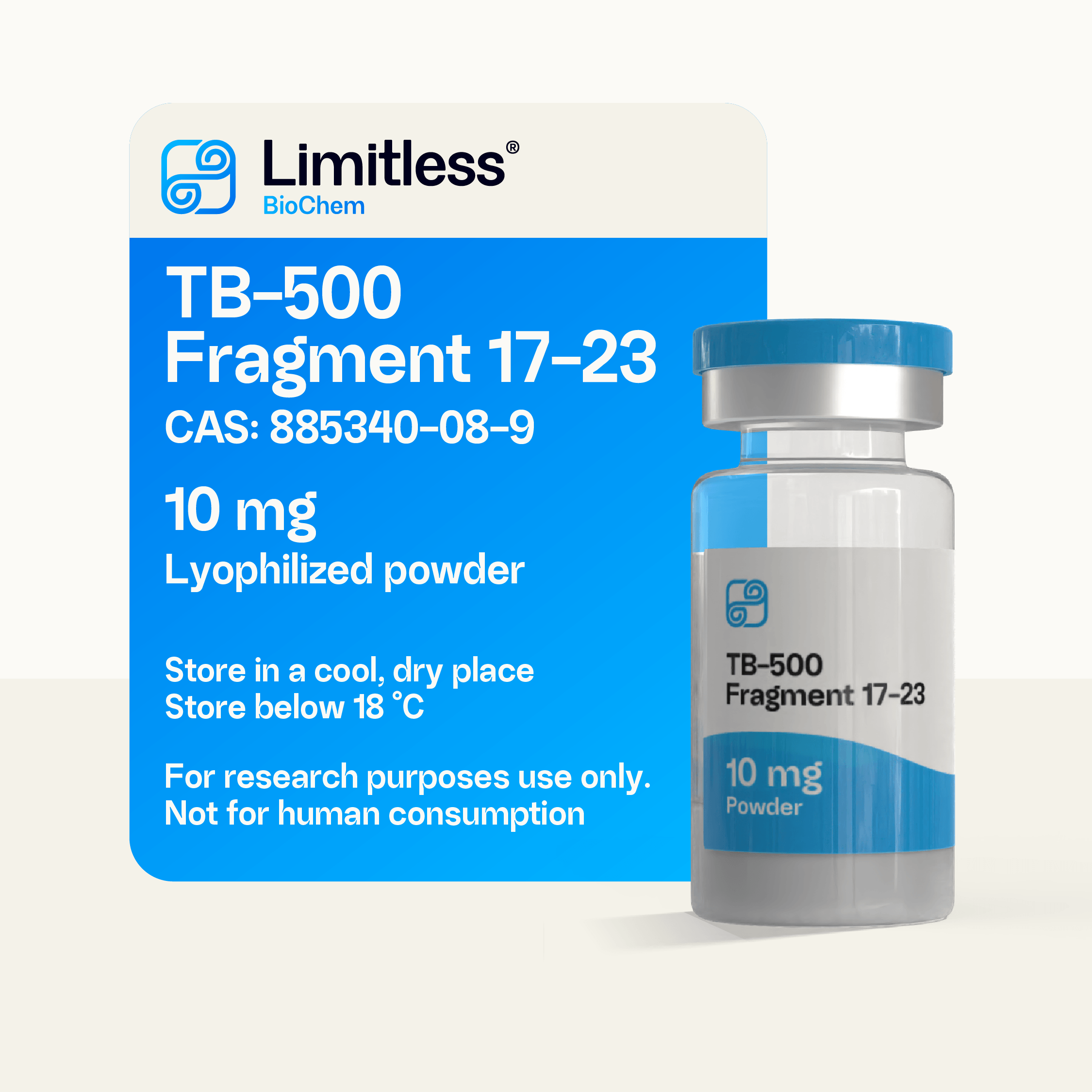
TB-500 Fragment 17-23 10mg
Research Overview
TB-500 Fragment (17-23) is a short thymosin beta-4–derived heptapeptide encompassing the LKKTETQ motif that has been identified as an active domain involved in actin binding and tissue-repair–related signaling. In in vitro and in vivo experimental systems, this fragment is used as a minimalist tool to study how truncated thymosin beta-4–derived sequences can influence cell motility, wound closure, angiogenesis and inflammatory mediator profiles in a more focused manner than the full-length parent protein.
Primary Research Areas
- Actin cytoskeleton and cell motility: used in models evaluating how thymosin beta-4–derived fragments modulate actin polymerization, cytoskeletal dynamics and directed cell migration in fibroblasts, endothelial cells and other motile cell types under controlled laboratory conditions.
- Wound-healing and tissue-repair models: applied in experimental wound-closure assays to investigate fibroblast migration, extracellular matrix deposition and re-epithelialization processes associated with soft-tissue repair and regeneration research.
- Angiogenesis and vascular remodeling: incorporated into in vitro and in vivo angiogenesis models to explore endothelial cell migration, tube formation and vascular network remodeling, as well as interactions with growth factors such as VEGF in repair-focused studies.
- Inflammatory mediator modulation: used as a probe in research on cytokine and chemokine profiles at sites of experimental injury, examining how thymosin beta-4 fragments can influence the balance between pro- and anti-inflammatory signaling during tissue remodeling.
- Neuroprotection and CNS injury models: evaluated in preclinical central nervous system models to study potential effects on glial and neuronal cell survival, axonal support and inflammatory control in the context of brain and spinal cord injury research.
Recommended solvent — Bacteriostatic water

- Research Use Only: Vials labeled with this designation are restricted to in vitro or animal laboratory experimentation.
- Lack of Human Data: Comprehensive long-term safety profiles, standardized dosing, and human efficacy trials are currently absent.
- The biochemical differences between full-length Thymosin Beta-4 and the 17-23 fragment?
- Preclinical mechanisms of actin binding and cell migration?
What is TB500 used for?

TB-500 is a synthetic peptide used experimentally and anecdotally to speed up soft-tissue recovery, reduce inflammation, and promote healing in muscles, tendons, and ligaments. It mimics a natural protein called thymosin beta-4, but it is not approved by the FDA for human medical use.
 Midi Health +3
- Muscle and Tendon Repair: Promoted to help heal tears, strains, and overuse injuries by encouraging cell movement to damaged areas.
 Rite Aid +1
- Reducing Inflammation: Used to calm down tissue inflammation following intense workouts or physical trauma.
 Santé Aesthetic Clinic Barcelona
- New Blood Vessel Growth: Believed to stimulate angiogenesis (the creation of new blood vessels), which helps deliver nutrients to poorly-healed or avascular tissues like ligaments
.
Rite Aid +2
- Systemic Recovery: Often taken alongside other peptides like BPC-157 (sometimes called the “wolverine stack”) for whole-body athletic recovery.
- Not FDA Approved: TB-500 lacks official approval and is heavily restricted or banned in regulated sports and competitive frameworks.
- Limited Human Data: Most of the evidence supporting its benefits comes from laboratory cell work, animal studies, or anecdotal user reports rather than large-scale human clinical trials.
Midi Health +3
For diluting lyophilized peptide powders, use a sterile and suitable research solvent such as bacteriostatic water (BAC), which may help support handling stability and reduce contamination risk.
For convenient laboratory use, see Bacteriostatic water 10ml.



Avis
Il n’y a pas encore d’avis.